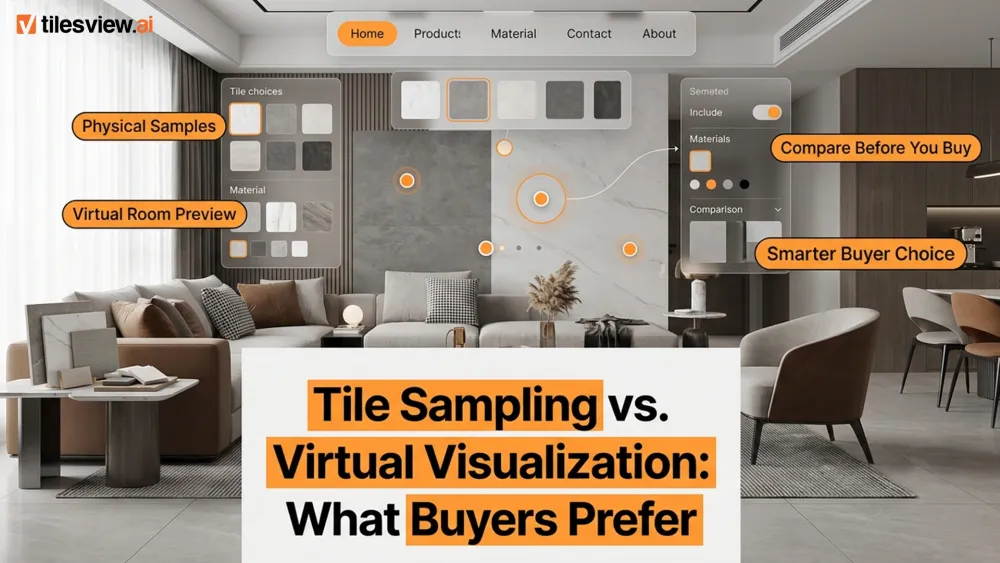
For decades, tile sampling has been a standard part of the buying process.
Homeowners carried heavy sample boards from showrooms to job sites. Designers requested multiple samples before approving a concept. Retailers shipped boxes across states just to help customers make a final decision.
But buyer expectations are changing.
Today’s customers want faster decisions, smarter shopping experiences, and more confidence before purchasing. In a digital-first market, waiting days for physical samples is no longer the only option.
This is where virtual visualization is reshaping the tile industry.
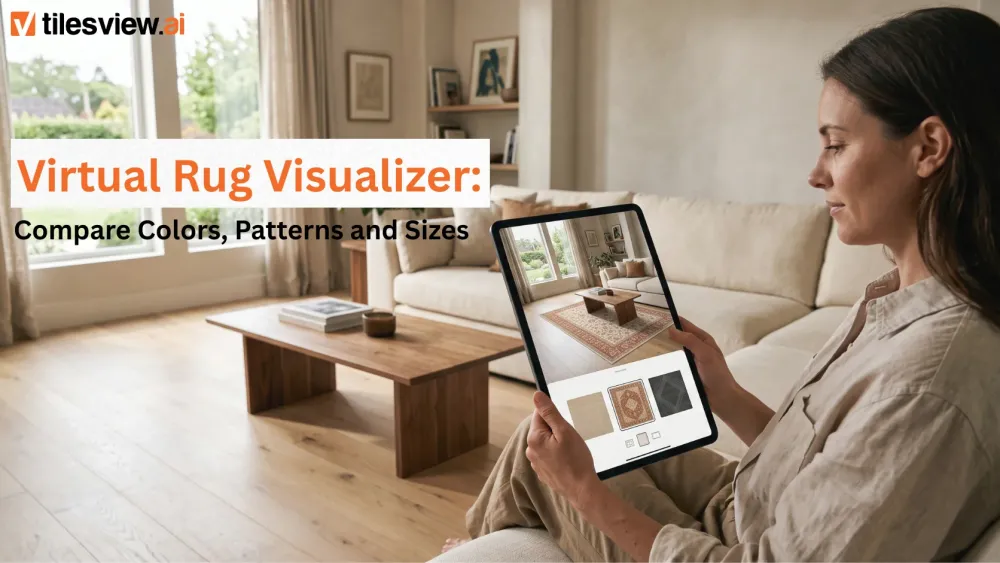
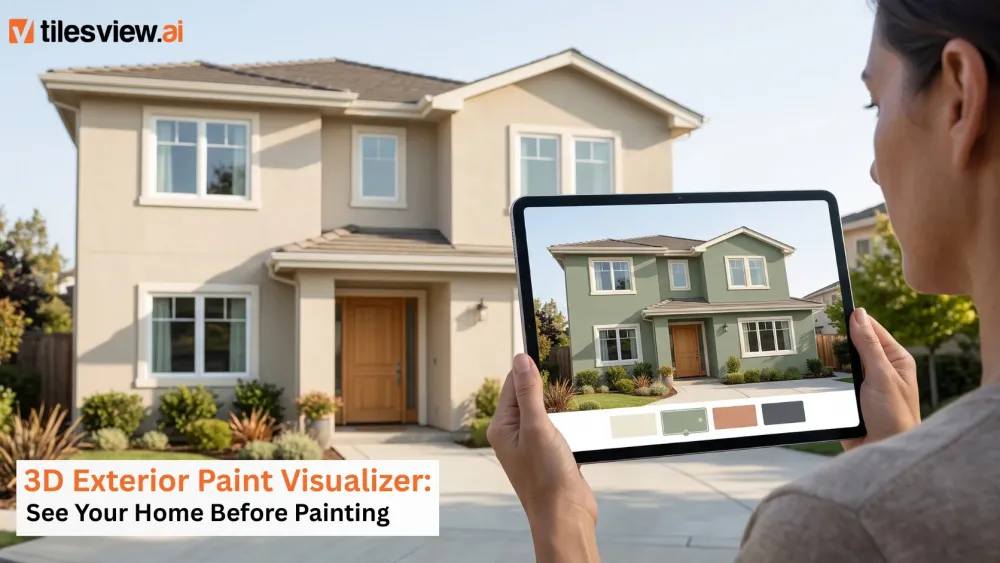
AI-powered room visualization tools now allow buyers to instantly preview tiles inside realistic spaces - often using their own room photos. Instead of imagining outcomes, customers can see them immediately.
As technology evolves, an important question is emerging across the ceramic and home improvement industry:
What do buyers actually prefer today - physical tile samples or virtual visualization?
The answer is changing faster than many brands expected.
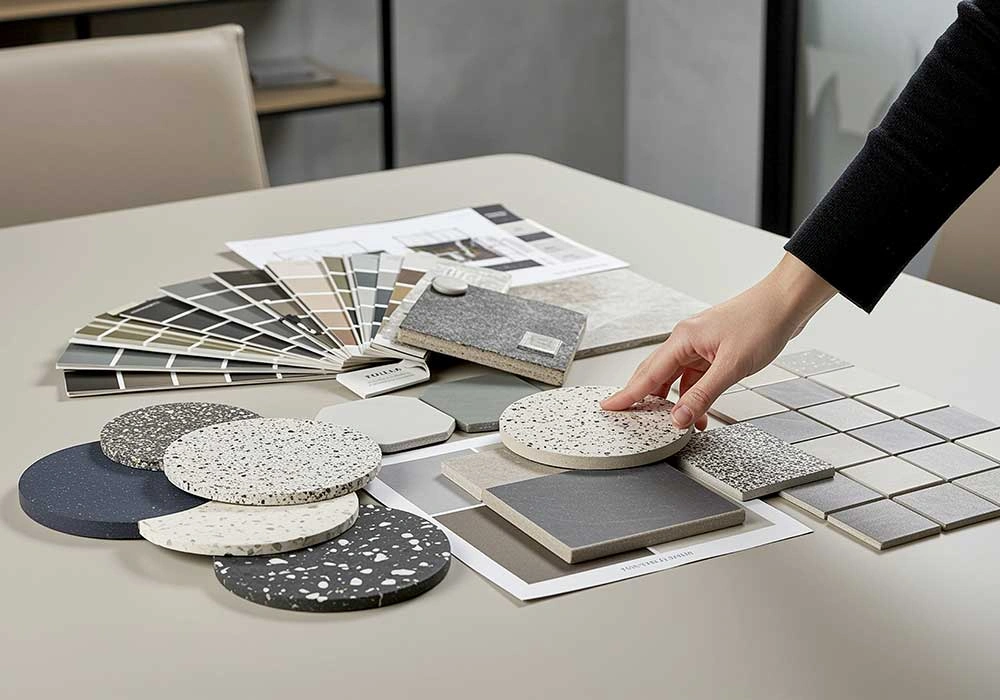
Tile is a highly visual product.
Color variation, texture, finish, lighting, and scale all influence how a tile looks once installed. Because of this, physical samples became the traditional way to help buyers make decisions.
Sampling allows customers to:
Touch the surface texture
Compare finishes in different lighting
Match colors with furniture or paint
Evaluate quality and thickness
Visualize design combinations manually
For years, this process worked because buyers had limited alternatives.
But traditional sampling also creates significant friction.
While physical samples remain useful, they often slow down the buying journey.
Many customers experience challenges such as:
Delayed Decision-Making: Shipping and reviewing samples takes time.
High Operational Costs: Manufacturers and retailers spend heavily on sample production and logistics.
Limited Visualization: Small samples rarely represent how a full room will actually look.
Buyer Uncertainty: Customers still struggle to imagine scale, layout, and overall atmosphere.
Inefficient Online Shopping: Samples alone do not create a seamless digital buying experience.
For modern buyers accustomed to instant digital experiences, this process can feel outdated.
Tilesview AI-powered visualizer is transforming how customers evaluate tile products.
Instead of relying only on samples, buyers can now:
Upload photos of their own rooms
Instantly apply different tile designs
Compare layouts side-by-side
Experiment with colors and finishes
Preview realistic design outcomes within seconds
This creates a far more immersive and convenient shopping experience.
Instead of imagining possibilities, buyers can visually experience them.
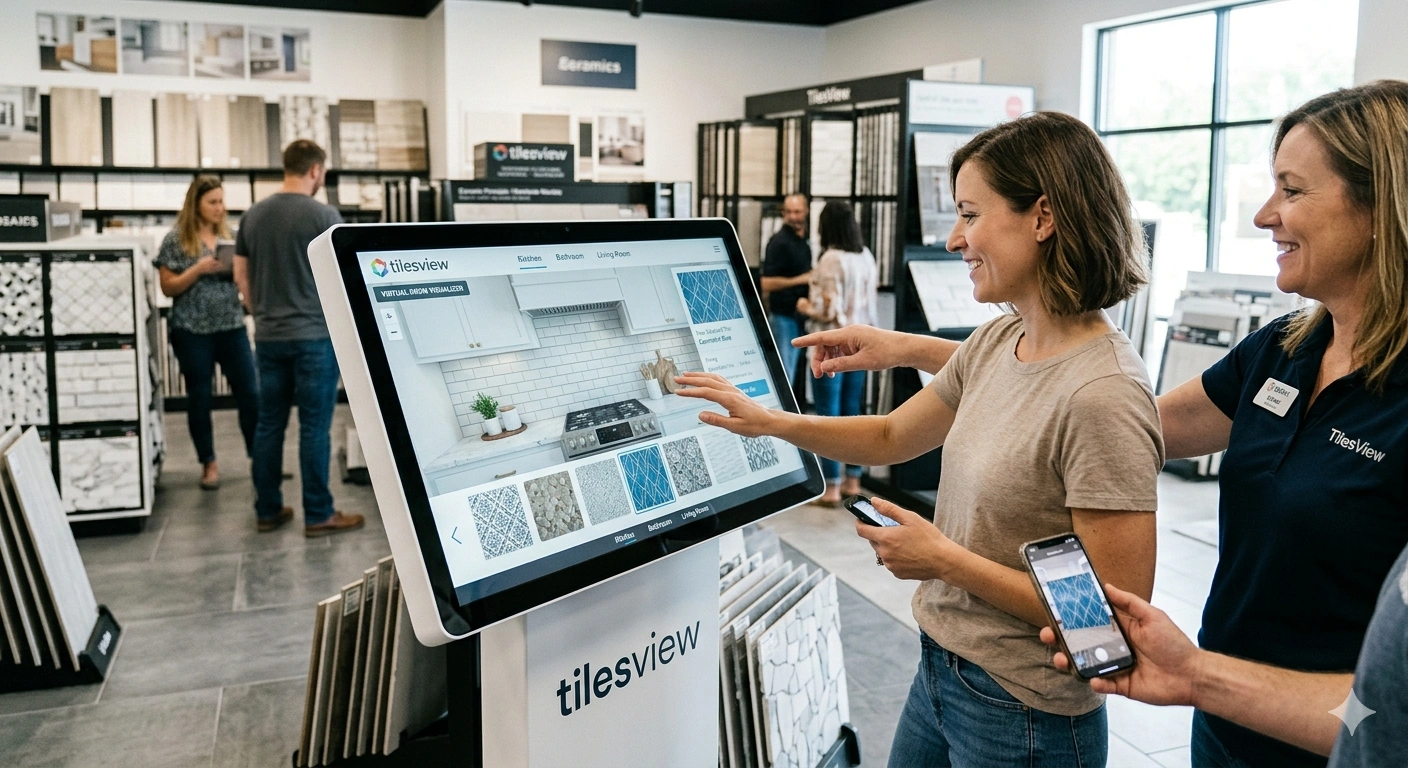
Today’s consumers prioritize speed, confidence, and convenience.
Virtual visualization aligns perfectly with those expectations.
One of the biggest advantages of AI visualization is immediate clarity.
A customer choosing kitchen flooring visualize instantly compare wood-look porcelain, marble finishes, or large-format tiles directly inside their own space.
This dramatically reduces uncertainty.
Traditional sampling can take days oreven weeks.
Virtual visualization delivers results instantly.
Buyers can explore multiple design options in a single session, accelerating the path from browsing to purchase.
For retailers and manufacturers, this means shorter sales cycles and higher conversion potential.
The home improvement industry is rapidly moving online.
But static product images often fail to provide enough context for confident purchasing decisions.
Virtual visualization bridges this gap by creating interactive product experiences.
Instead of scrolling through catalogs, buyers actively engage with products in realistic room environments.
One of the biggest reasons for returns in home decor and tile purchases is mismatched expectations.
Virtual room previews help customers make more informed choices before ordering.
When buyers can see how products fit their space, they are less likely to regret the purchase afterward.
Not entirely.
Physical samples still play an important role for certain decisions, especially in large commercial projects or premium material evaluations.
Many buyers still want to:
Feel texture physically
Verify finish quality
Confirm exact color tones
Evaluate material durability
However, the role of sampling is evolving.
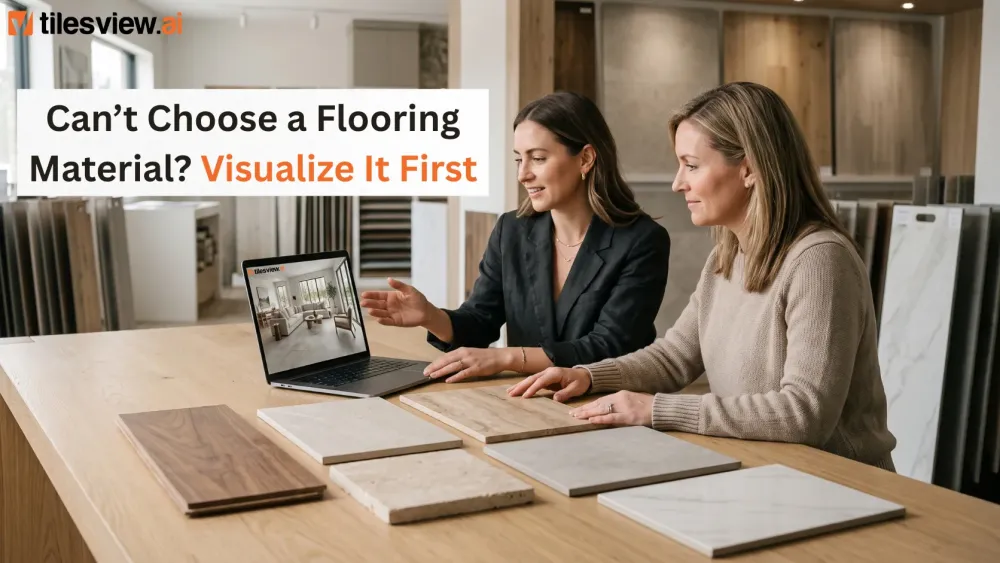
Instead of being the first step in the buying journey, physical samples are increasingly becoming the final confirmation step after virtual visualization has already narrowed down the options.
This creates a much more efficient buying process.
The future of tile selling is not about replacing samples completely.
It’s about combining physical and digital experiences strategically.
Leading tile brands now use virtual visualization to:
Reduce unnecessary sample requests
Help buyers shortlist products faster
Improve online engagement
Increase customer confidence
Streamline showroom experiences
Then, physical samples are used only when necessary for final validation.
This hybrid approach improves both customer experience and operational efficiency.
American consumers increasingly expect personalization and digital convenience when shopping for home improvement products.
Whether they are renovating a bathroom, designing a new kitchen, or selecting flooring for a commercial project, buyers want tools that help them make confident decisions quickly.
AI tile visualizers meet these expectations by offering:
Personalized room previews
Faster product exploration
Interactive online shopping
Better design confidence
More control over the decision-making process
For U.S. tile retailers and manufacturers, visualization technology is becoming a competitive necessity.
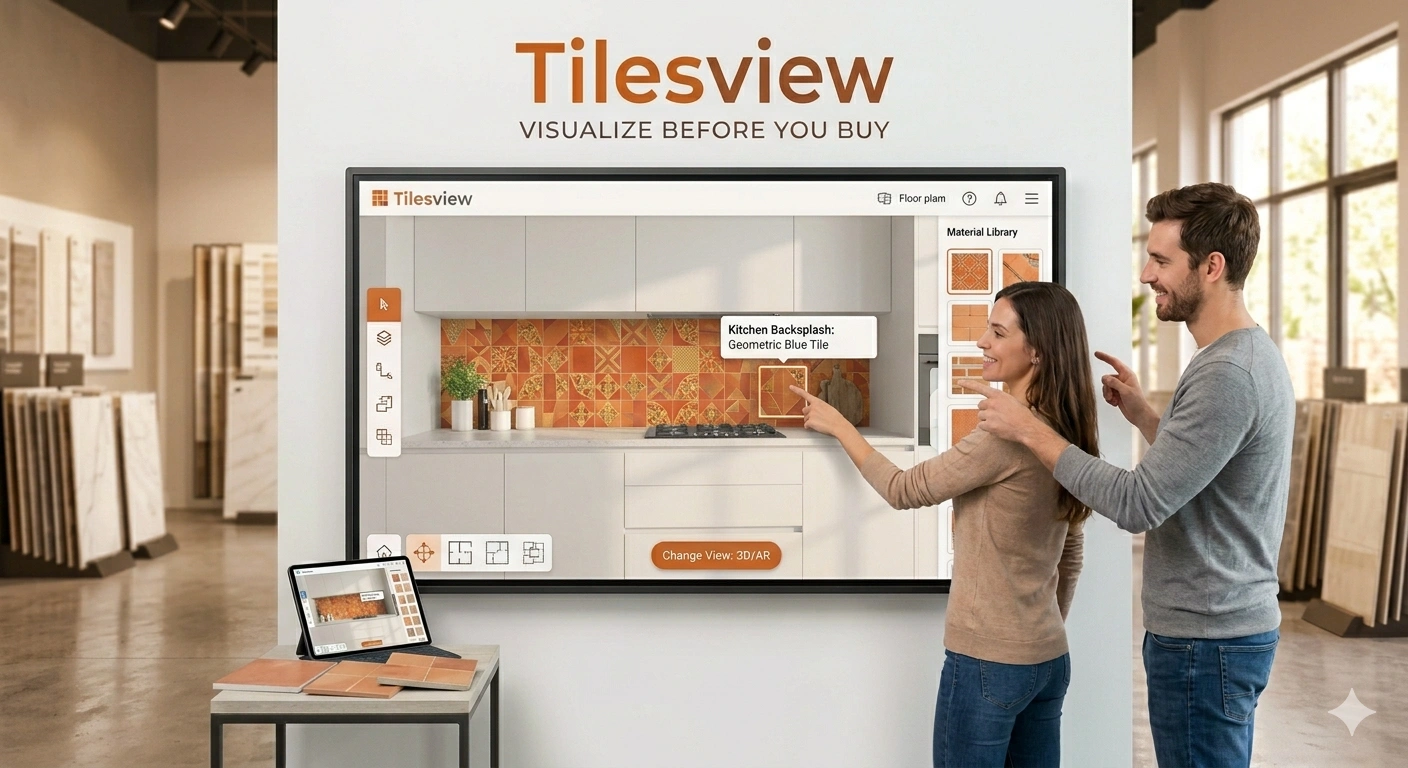
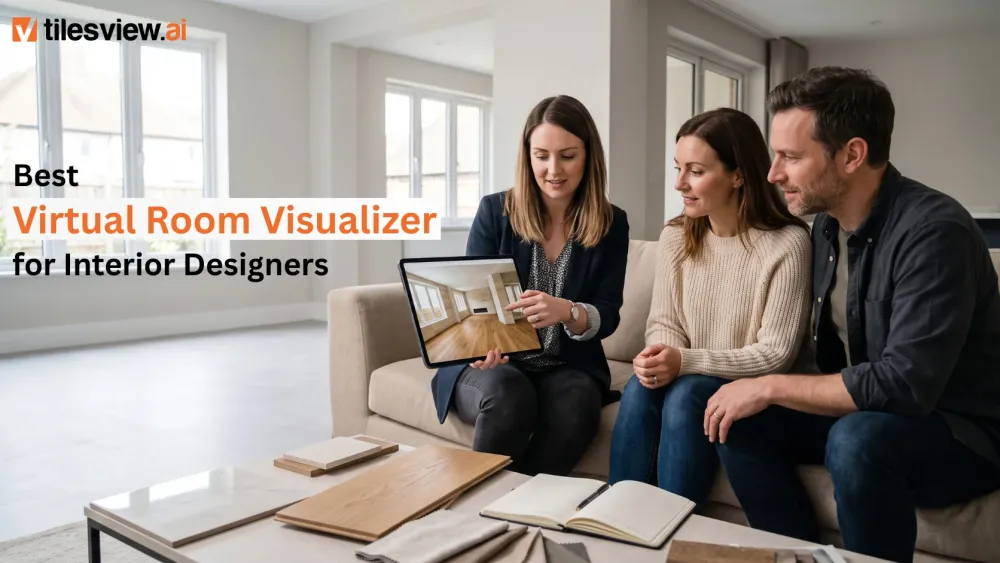
Tilesview helps tile brands, retailers, distributors, and design professionals create immersive visualization experiences that simplify product selection.
With Tilesview, users can:
Upload real room photos
Compare multiple layouts and finishes
Create interactive buying journeys
Improve confidence before purchase
Instead of relying only on catalogs and samples, buyers gain a faster, smarter, and more engaging way to shop for tile products.
The tile industry is moving toward a more digital, customer-centric future.
Buyers no longer want to rely entirely on imagination, showroom visits, or lengthy sample processes.
They want immediate visualization, faster decisions, and greater purchase confidence.
Virtual visualization delivers exactly that.
While physical samples will continue to play a role, AI-powered visualization is becoming the preferred starting point for modern tile buying journeys.
The brands that embrace this shift will create stronger customer experiences, improve conversions, and stay ahead in an increasingly competitive market.
Tilesview empowers tile brands and retailers with AI-powered room visualization technology designed to improve customer engagement and accelerate buying decisions.
Give your customers the ability to see products in their own spaces before they buy.
Book a demo with Tilesview and modernize the tile buying experience.

Anand Bhoraniya is a technology entrepreneur and visualization innovator at Tilesview, specializing in AI-powered room visualization software for tile, flooring, paint, and wall covering brands. He regularly shares insights on AI visualization trends, virtual showroom experiences, personalized design technology, warm minimalist interiors, and photorealistic room design solutions.
Get the latest insights on room visualizer, interior design trends, and product updates delivered to your inbox.
No spam. Unsubscribe anytime.