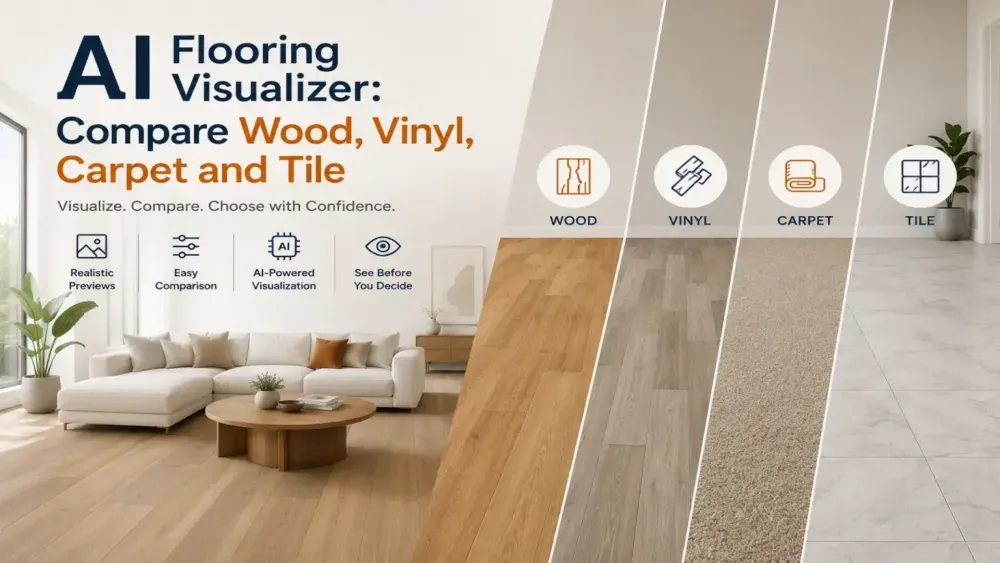
Choosing a new floor is much easier when you can see the result before making a purchase.
Samples can help you understand color and texture, but they rarely show how a flooring option will look across an entire room. A light oak floor may make one space feel brighter, while a dark tile can completely change the character of another. Carpet, vinyl, wood, and tile can also create very different visual effects even when they share similar colors.
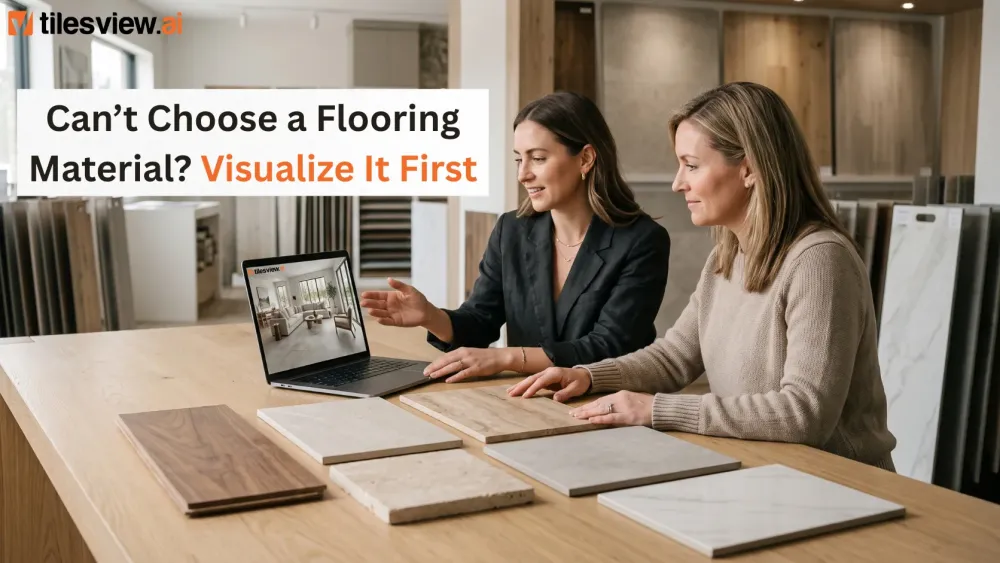
An AI flooring visualizer removes much of that uncertainty by allowing shoppers, designers, architects, and flooring businesses to preview different flooring materials inside a real room image.
Instead of imagining the finished space, users can compare options visually and make more confident decisions.
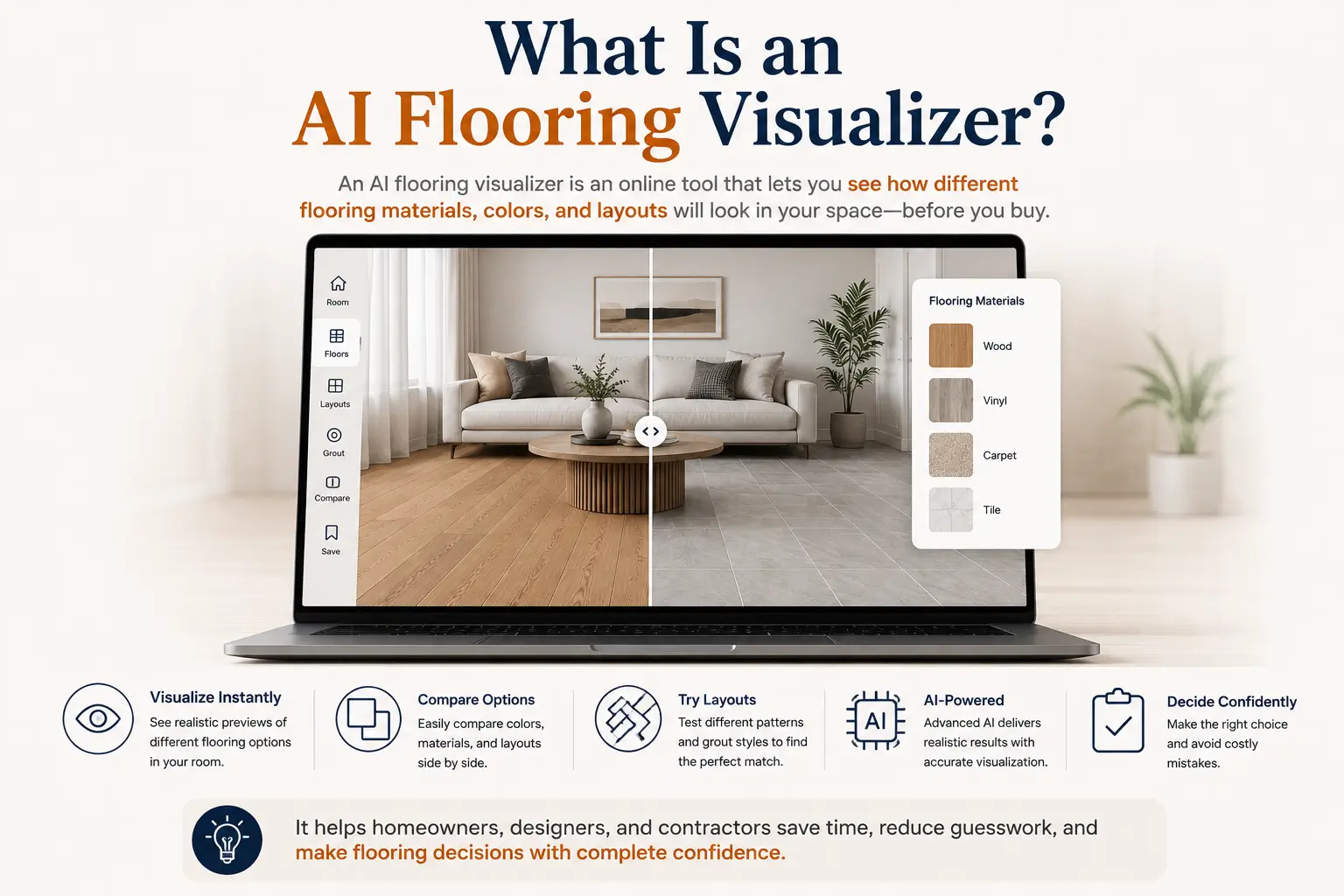
An AI flooring visualizer is a digital tool that lets users upload or select a room and virtually apply different flooring products to the floor area.
Depending on the platform, users may be able to experiment with:
Advanced visualization platforms use AI and computer vision to recognize the room, identify the floor area, and display products with realistic perspective.
For flooring manufacturers and retailers, the technology creates something especially valuable: a way for customers to experience the product inside their own space before purchasing it.
There is no single flooring material that works for every interior.
Room size, lighting, furniture, wall colors, lifestyle, installation location, and design preferences can all influence the final choice.
An AI room visualizer makes those differences easier to compare.
Wood flooring remains popular for interiors that need warmth and a natural appearance.
With a flooring visualizer, users can quickly compare variables such as:
For example, pale oak flooring can make a compact room appear more open, while deeper walnut tones may create a more dramatic or luxurious atmosphere.
The advantage of visualization is that customers do not have to evaluate these options independently. They can see how each finish interacts with their existing furniture, walls, and lighting.
Modern vinyl flooring can reproduce the appearance of wood, stone, concrete, and other materials.
That variety is useful, but it can also create decision fatigue.
An AI vinyl flooring visualizer lets shoppers move quickly between different looks without physically installing samples throughout the room.
A customer could compare:
Wood-look vinyl → stone-look vinyl → neutral vinyl → darker contemporary designs
within the same interior.
For manufacturers and retailers with large product catalogs, visualization can also make product discovery more engaging because customers explore products based on how they look in context rather than relying only on thumbnails.
The carpet changes much more than the floor color. It can influence the entire visual mood of a bedroom, living room, office, or hospitality space.
Using a carpet visualizer, shoppers can experiment with:
This is particularly helpful because small carpet swatches can be difficult to evaluate at room scale.
A shade that looks subtle on a sample may appear significantly stronger when applied across an entire floor.
Visualization allows buyers to see that effect before committing to a product.
Tile offers some of the widest possibilities for visualization.
Customers may need to compare not only colors but also:
A small product image rarely communicates what a tile will look like when repeated across a complete floor.
An AI tile visualizer can place the design across the room so buyers can evaluate the overall pattern, scale, and aesthetic.
For ceramic and porcelain tile brands, this can be particularly useful because visual presentation plays a major role in product selection.
The exact process varies by platform, but the experience can be remarkably simple.
Start with an image of the room you want to redesign.
A clear photograph with visible flooring usually produces the most useful visualization.
Browse available wood, vinyl, carpet, tile, or other surface options.
The platform identifies the floor area and digitally places the selected material into the room.
Switch between products to evaluate colors, materials, patterns, and styles.
Once the strongest options are identified, customers can move toward samples, quotations, dealer enquiries, or purchase decisions.
What previously required imagination becomes an interactive comparison process.
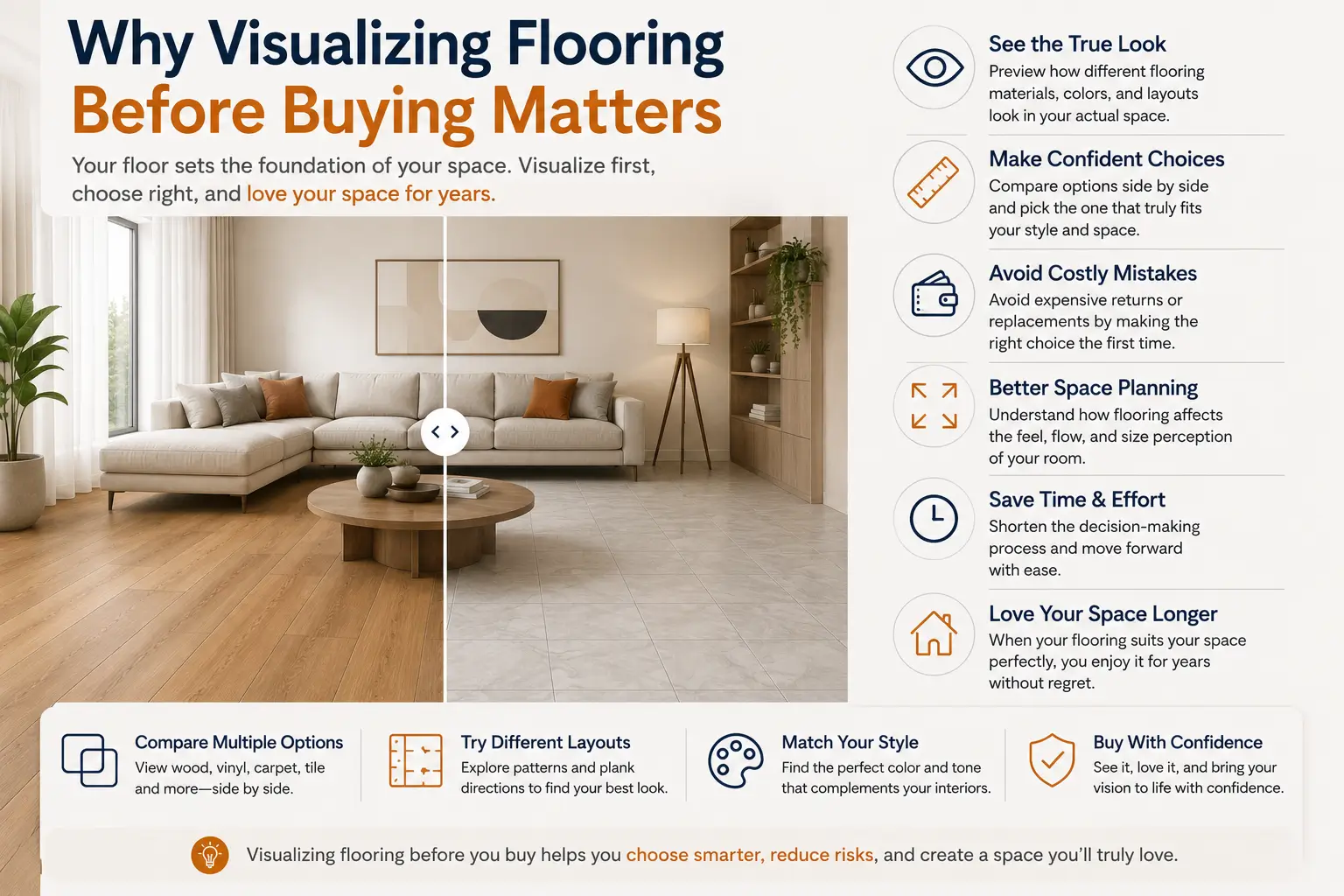
Flooring usually covers one of the largest visible surfaces in an interior.
Changing it can transform the perception of the entire room.
Yet traditional flooring shopping often relies on product samples, catalog photography, showroom displays, or imagination.
That creates a gap between seeing the product and seeing the product in your space.
AI visualization helps close that gap.
Instead of taking multiple samples home and trying to imagine the result, users can preview numerous designs digitally.
This makes it easier to shortlist products.
Seeing the flooring inside a familiar room gives shoppers additional context.
They can evaluate how the product works with their:
A customer who initially wants wood flooring might discover that wood-look tile creates the aesthetic they prefer.
Someone considering beige carpet might find that a darker shade works better with their furniture.
Visualization encourages exploration.
One of the biggest challenges in selling interior products is helping buyers picture the finished result.
Room visualization turns an abstract product choice into a visual experience.
Choosing between wood, vinyl, carpet, and tile doesn't have to be based entirely on imagination.
An AI Flooring Visualizer allows you to see different flooring possibilities in the context of your actual space.
With Tilesview, the process starts with your room, moves to material selection, and ends with a visualized space. You can explore multiple flooring categories, compare different design directions, and even coordinate flooring with walls, paint, rugs, and other surfaces.
For customers, this creates a more visual way to explore flooring.
For flooring businesses, it creates a more engaging way to present products.
Click. Select. Visualize. Compare. Choose the flooring that fits your space.
Ready to see how different flooring options could look in your room?
Explore Tilesview's AI-powered room visualization platform and turn your flooring ideas into realistic visual experiences.
Visualize your space. Compare flooring. Make a more confident design decision.

Anand Bhoraniya is a technology entrepreneur and visualization innovator at Tilesview, specializing in AI-powered room visualization software for tile, flooring, paint, and wall covering brands. He regularly shares insights on AI visualization trends, virtual showroom experiences, personalized design technology, warm minimalist interiors, and photorealistic room design solutions.
Get the latest insights on room visualizer, interior design trends, and product updates delivered to your inbox.
No spam. Unsubscribe anytime.