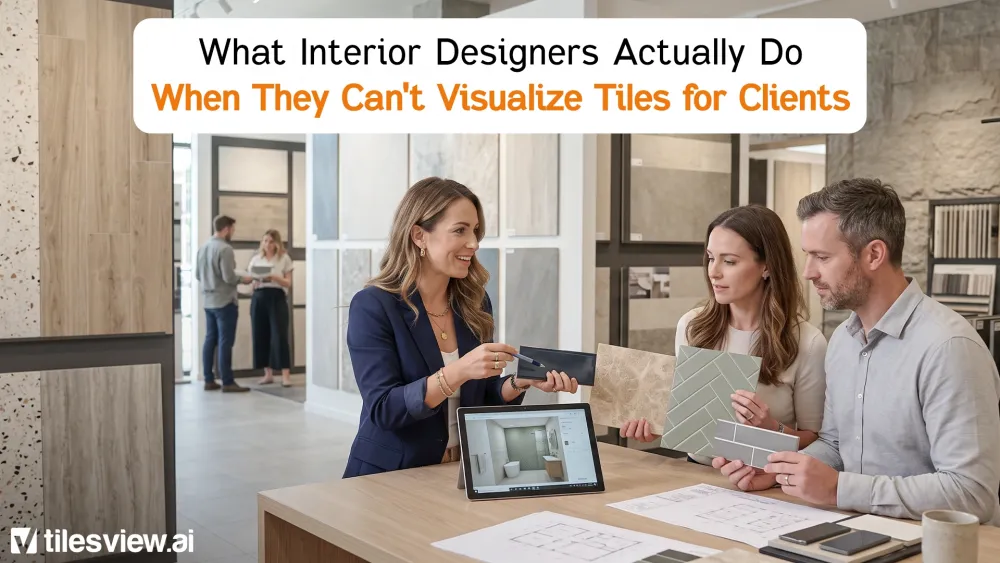
Choosing the right tile shouldn't rely on imagination alone. Yet every day, interior designers face a familiar challenge: helping clients picture how a tile will actually look in their own space.
A beautiful tile sample on a showroom table rarely tells the whole story. The same porcelain tile can appear warm or cool depending on lighting, room size, furniture, wall colors, and installation pattern. This uncertainty often leads to hesitation, multiple design revisions, delayed approvals, and sometimes expensive mistakes.
Fortunately, AI-powered room visualization is changing how designers present tile concepts, making client decisions faster and far more confident.
Clients often ask questions like:
Without a realistic visualization, designers are forced to rely on mood boards, sketches, physical samples, or their own ability to describe the final result. Even experienced professionals know that's rarely enough.
The biggest problem isn't choosing the wrong tile, it's helping clients feel confident before making the purchase.
Before AI visualization tools became available, designers typically relied on several methods.
Physical Tile Samples
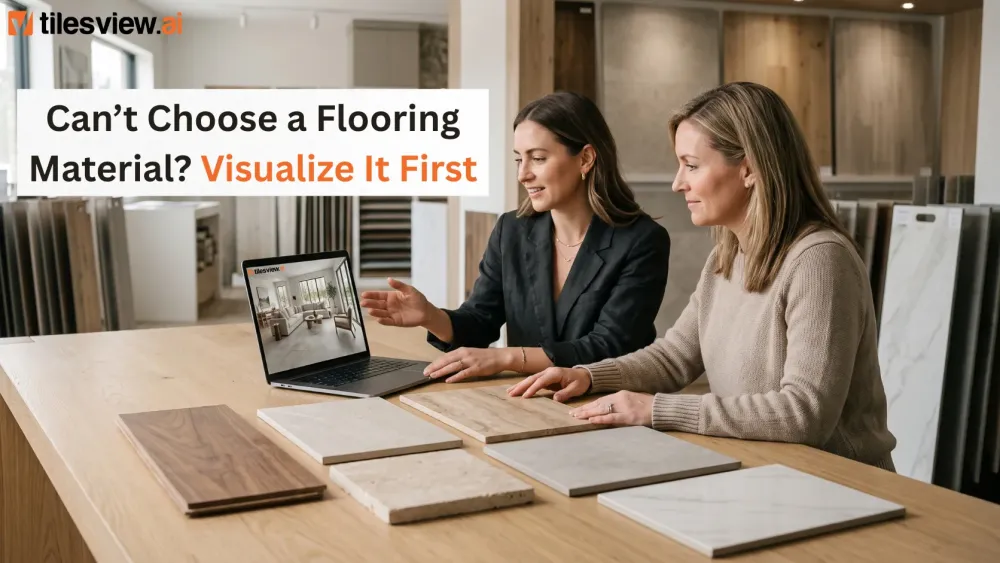
Tile samples help clients understand texture and finish, but they don't reveal how the entire room will look once installed.
Mood Boards
Mood boards communicate style and inspiration, yet they cannot accurately represent scale, lighting, grout color, or the interaction between different design elements.
3D Renderings
Professional renderings produce impressive visuals but usually require specialized software, additional time, technical expertise, and revisions whenever clients request changes.
Client Imagination
Perhaps the least reliable approach is asking clients to imagine the finished space based solely on samples or drawings. Unfortunately, imagination varies from person to person, making misunderstandings common.
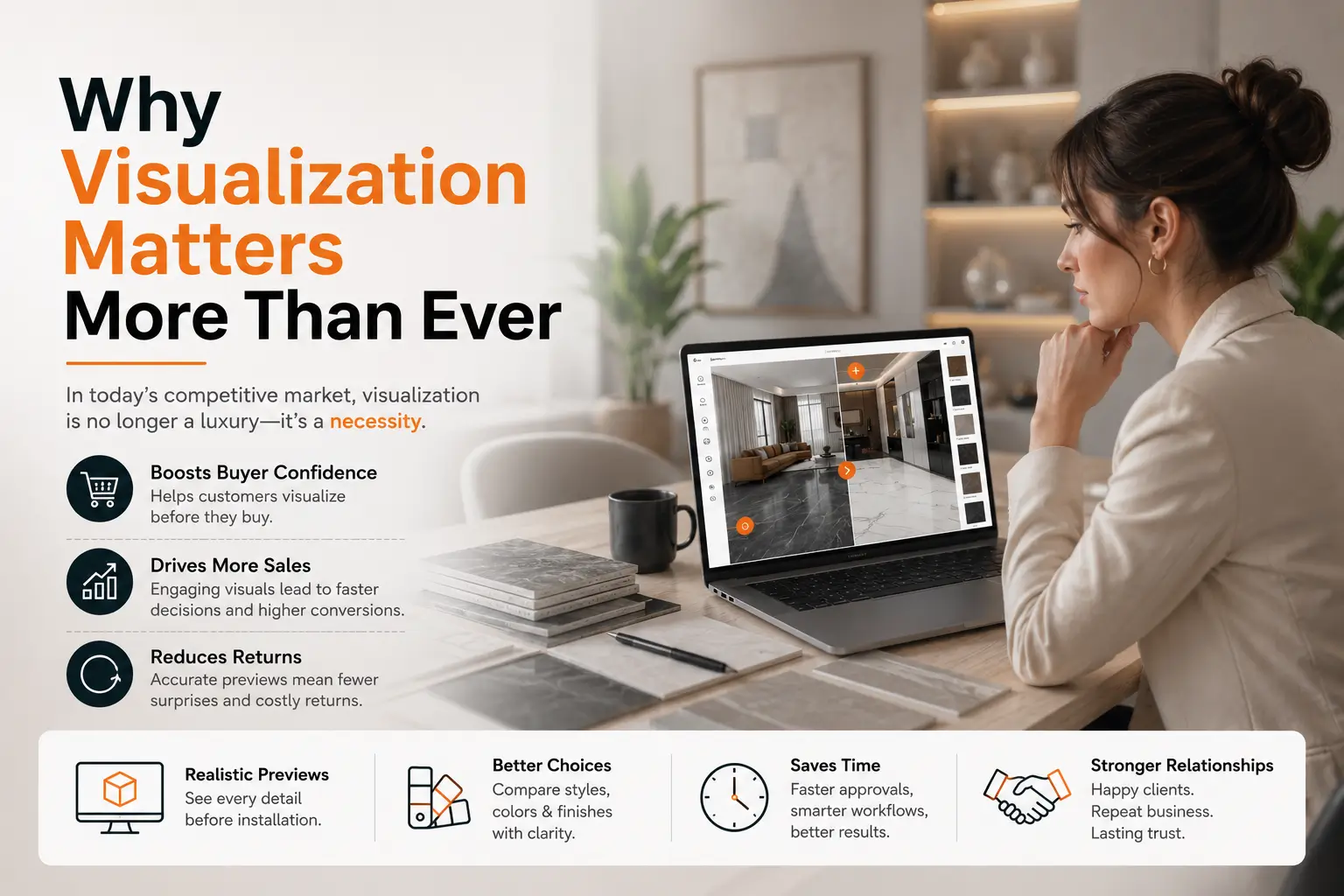
Today's homeowners expect certainty before investing in renovations.
With social media showcasing perfectly designed interiors, clients arrive with higher expectations and less patience for uncertainty. They want to compare options instantly and see realistic previews before committing.
According to industry reports, over 70% of homeowners feel more confident making renovation decisions when they can visualize products in their own spaces. This growing demand for visual certainty is pushing interior designers, architects, and tile retailers toward AI-powered visualization tools.
When clients cannot visualize the outcome, they often:
For designers, these delays translate into longer project timelines, additional revisions, and reduced productivity.
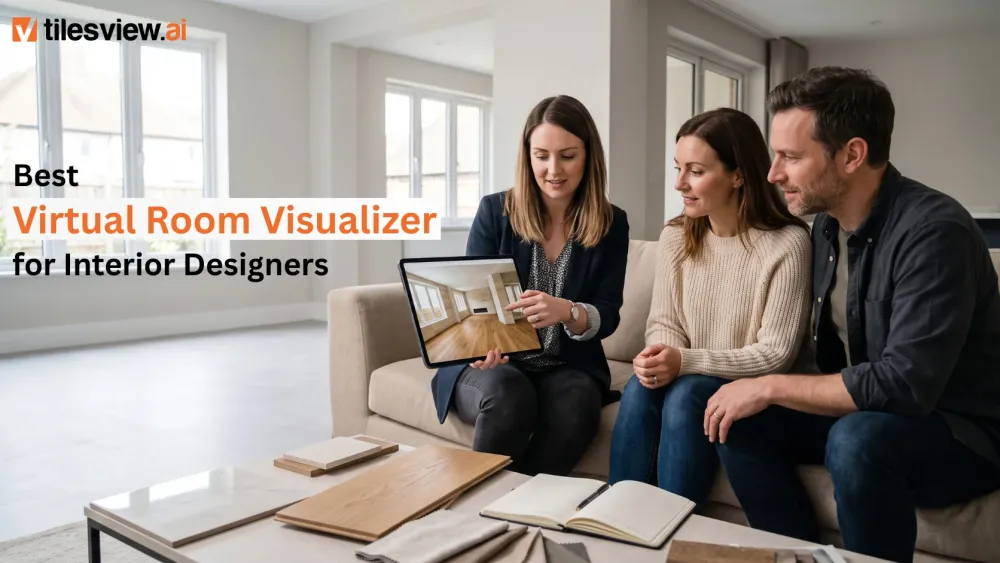
Instead of asking clients to imagine the finished room, designers can now simply show it.
Modern virtual tile visualization platforms allow designers to upload a room photo and instantly replace existing flooring or wall surfaces with different tile collections.
Within seconds, clients can compare:
This transforms abstract design discussions into visual decision-making.

Clients make decisions much faster when they can clearly see the proposed design.
Visualization reduces uncertainty and helps designers present recommendations with greater authority.
Approving materials before installation significantly reduces expensive last-minute modifications.
Interactive visualization creates a collaborative experience where clients feel involved in every design decision.
Instead of preparing multiple manual concepts, designers can generate several realistic options in minutes.

The design industry is rapidly embracing digital experiences.
Architects, tile retailers, manufacturers, and interior designers increasingly use AI-powered visualization to improve customer engagement and simplify product selection.
Clients no longer expect static catalogs, they expect to see products in their own homes.
Businesses that provide this experience often build greater trust, shorten sales cycles, and improve conversion rates.
Tilesview enables interior designers to transform ordinary room photos into realistic tile visualizations without requiring advanced rendering skills.
Using AI-powered visualization, designers can:
Whether designing kitchens, bathrooms, living rooms, outdoor spaces, or commercial interiors, Tilesview simplifies the visualization process while enhancing the client experience.
Instead of asking clients to imagine the result, designers can show it with clarity.
Interior design has always been about helping people envision better spaces. The challenge is that imagination alone isn't always enough.
As client expectations continue to rise, visualization is becoming one of the most valuable tools in a designer's workflow. AI-powered room visualization reduces uncertainty, speeds up approvals, and creates a more engaging design experience from the very first meeting.
For interior designers looking to deliver greater confidence, faster decisions, and more impressive presentations, the future isn't just selecting the right tile, it's helping clients see it before it's ever installed.
Ready to transform the way you present tile designs?
Explore Tilesview and discover how AI-powered room visualization can help you impress clients, accelerate approvals, and bring every design concept to life.
A small sample does not show how the color, pattern, grout lines, scale, and repetition will appear across a complete wall or floor. Lighting and surrounding finishes can also change how the tile is perceived.
A tile visualizer is a digital tool that allows users to preview tile products on floors or walls using a sample room or an uploaded image of an actual space.
Platforms that support room-photo uploads allow designers or clients to apply selected products to a photograph of the intended space, making comparisons more relevant to the project.
No. Physical samples remain important for evaluating texture, finish, thickness, color variation, and material quality. Visualization complements samples by showing how the tile may appear across a larger surface.
It can help clients understand and compare options earlier in the decision process. This may reduce uncertainty and make feedback more specific, although final results still depend on product accuracy, lighting, installation, and room conditions.

Anand Bhoraniya is a technology entrepreneur and visualization innovator at Tilesview, specializing in AI-powered room visualization software for tile, flooring, paint, and wall covering brands. He regularly shares insights on AI visualization trends, virtual showroom experiences, personalized design technology, warm minimalist interiors, and photorealistic room design solutions.
Get the latest insights on room visualizer, interior design trends, and product updates delivered to your inbox.
No spam. Unsubscribe anytime.