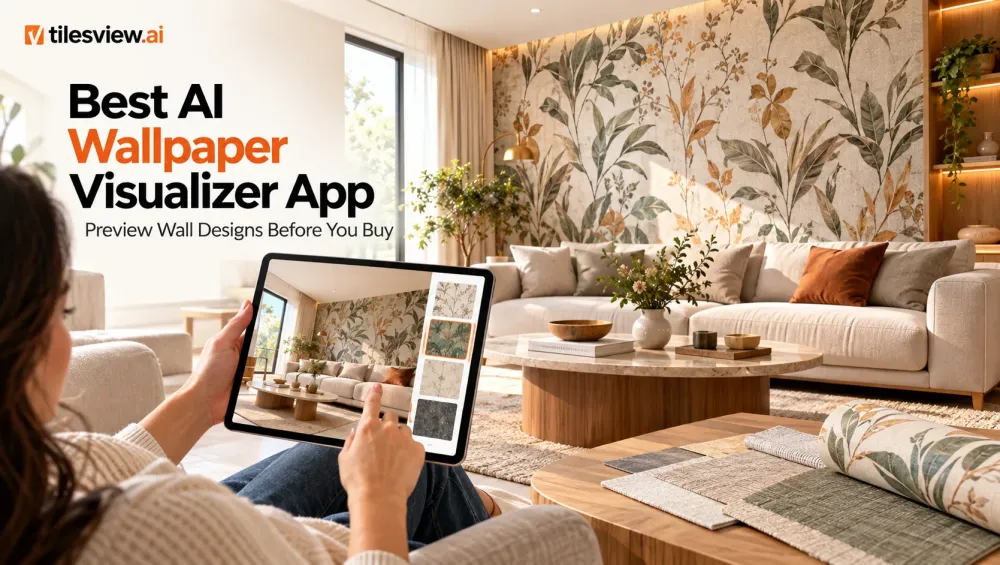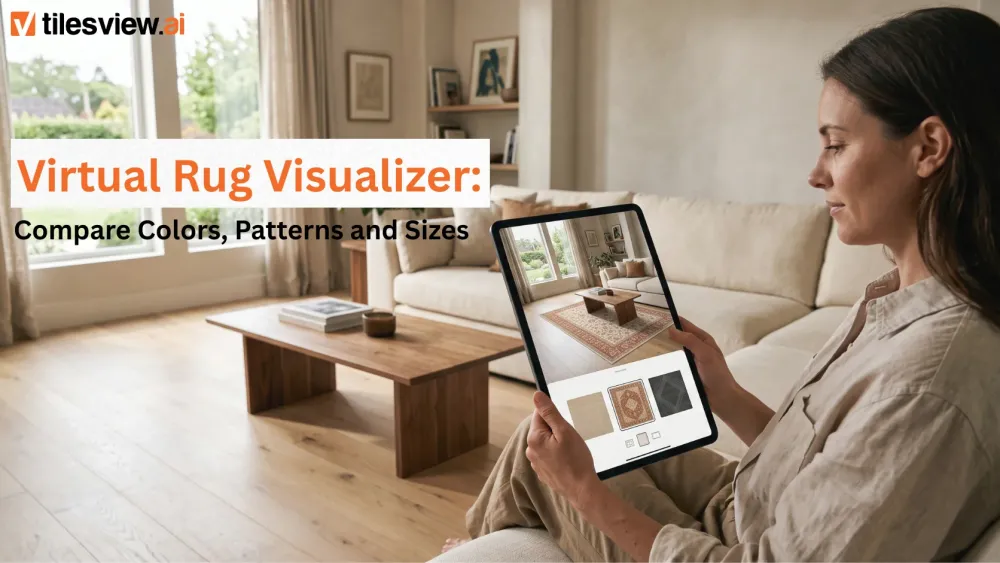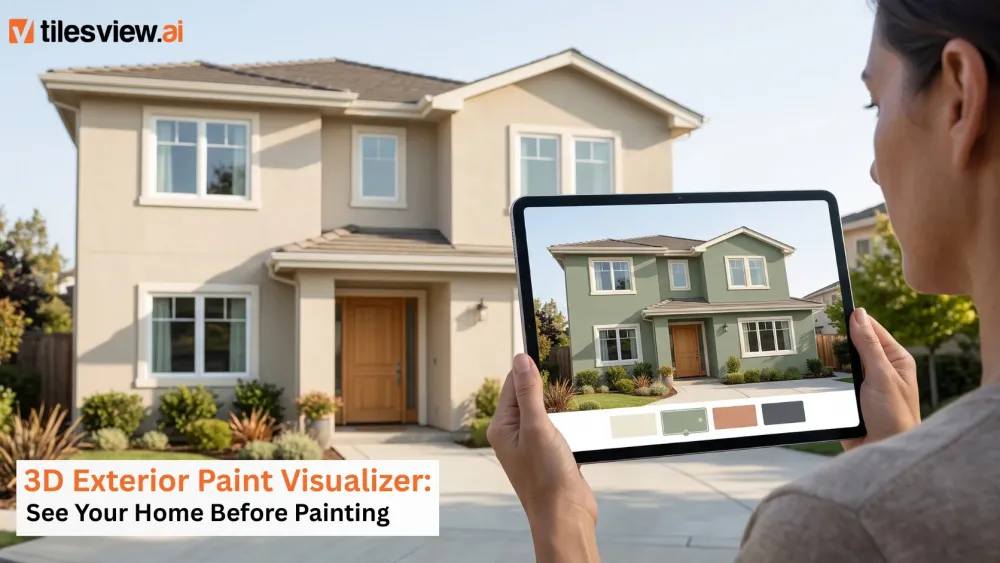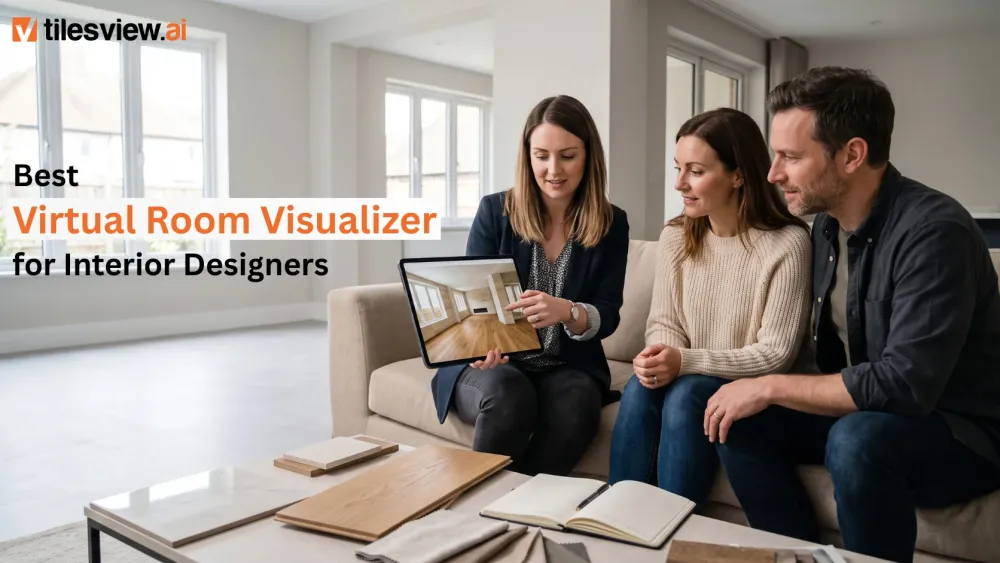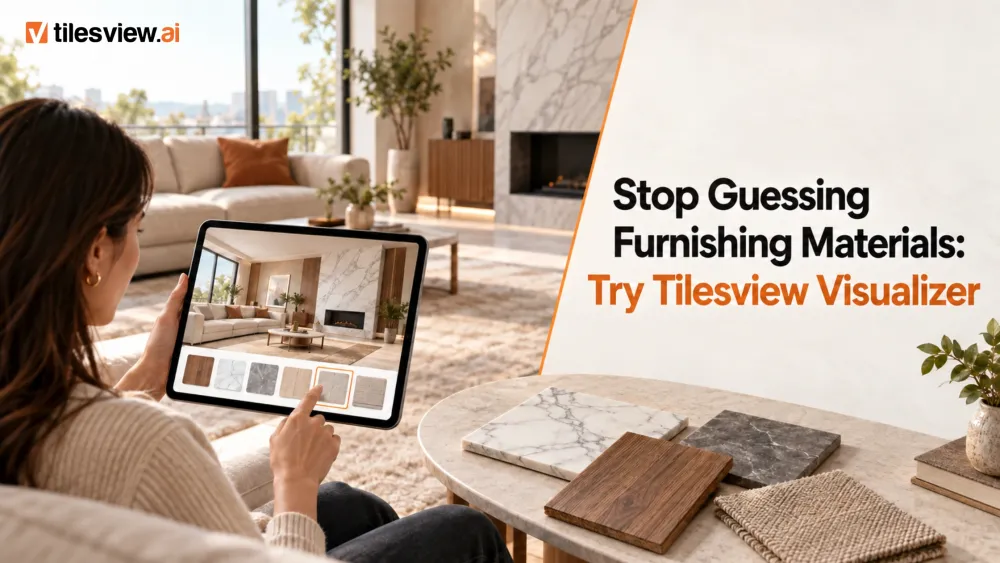
Choosing furnishing materials should be exciting. But when you are looking at dozens of tiles, flooring options, wall finishes, colors, and textures, one question can make the decision surprisingly difficult:
How will this actually look in the room?
A product sample can show you the material. A catalog can show you the design. But neither necessarily shows you how that product will work with the space you are designing.
That is where an AI furnishing material visualizer can change the experience.
With Tilesview AI Visualizer, customers can explore furnishing materials visually and make more informed choices before they buy. Instead of relying only on imagination, they can see products in a realistic room context and compare possibilities more easily.
A tile or surface may look perfect when viewed individually. Put it into an entire room, however, and the impression can change.
Room size, surrounding colors, furniture, lighting, layout, and other materials all influence the finished look.
This creates a visualization gap between seeing a product and seeing the finished space.
For customers, that gap can lead to hesitation:
Without visualization, customers are often being asked to make an important design decision based largely on imagination.
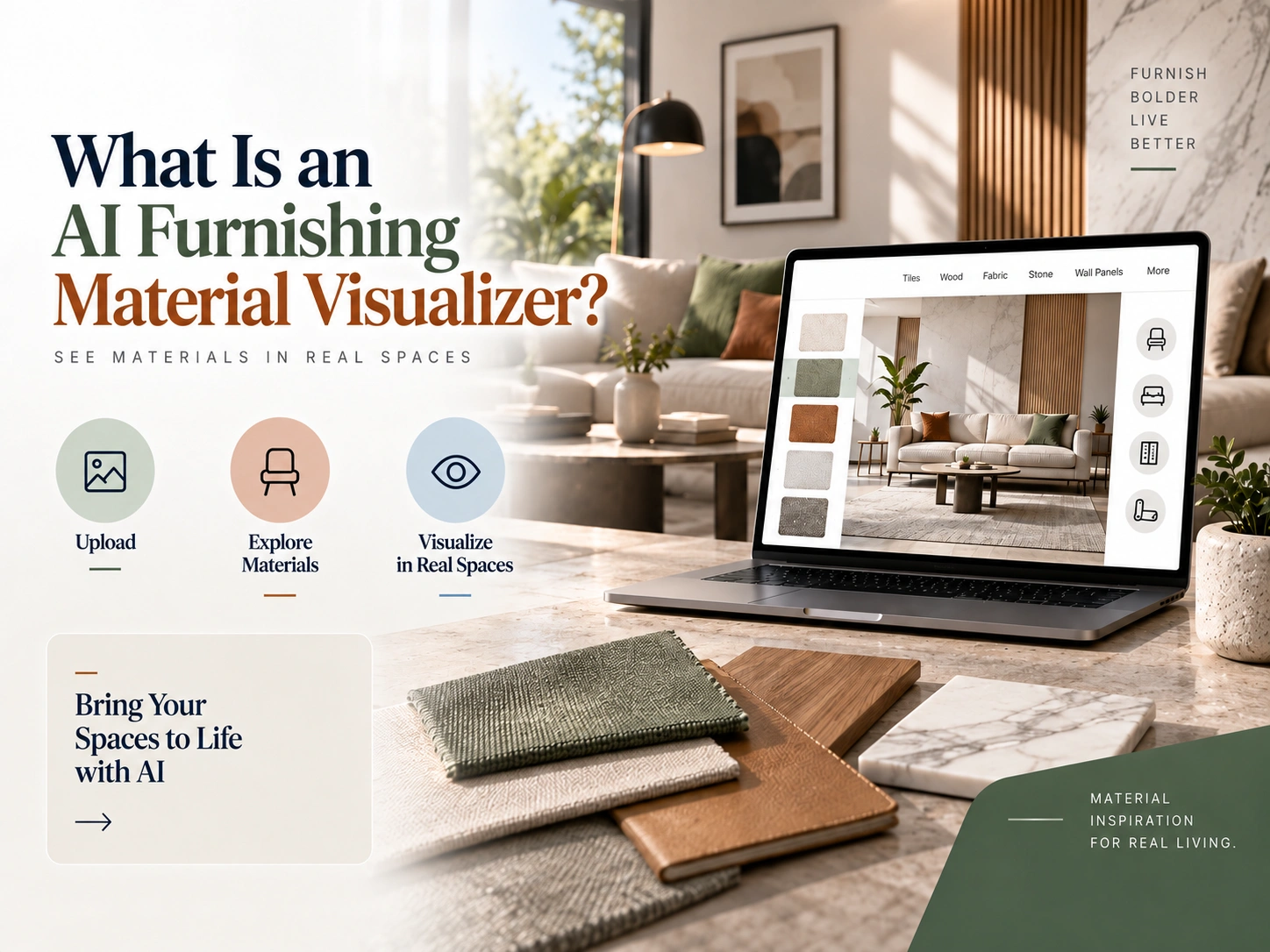
An AI furnishing material visualizer helps people preview furnishing products in a room digitally.
Rather than evaluating a material only through a product thumbnail or physical sample, shoppers can explore how different options could appear when applied to an interior.
The experience turns traditional product selection into something much more visual:
Choose a space. Select a product. Visualize it. Compare alternatives. Choose with greater confidence.
This is particularly valuable for visually driven categories such as tiles, flooring, surfaces, and other interior materials.
Tilesview brings visualization directly into the material-selection journey.
Customers can move beyond browsing individual products and start exploring how those products contribute to the overall appearance of a space.
Instead of thinking:
“I like this material.”
They can begin asking the more useful question:
“Do I like this material in my room?”
That small change can make a significant difference to the shopping experience.
Finding one attractive product is rarely the problem.
Choosing between several attractive products is.
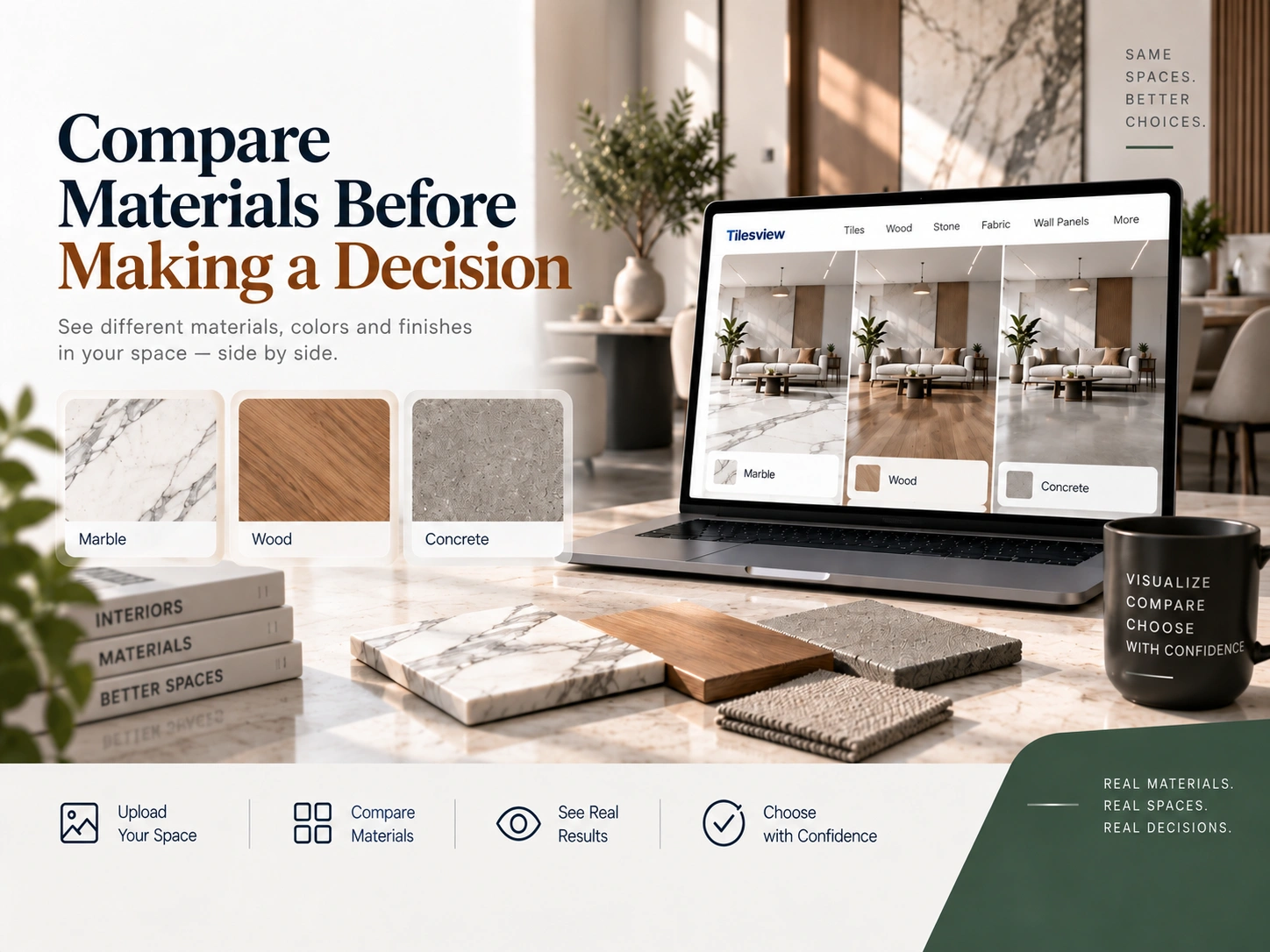
Imagine a customer considering a light marble-look tile, a warmer stone finish, and a contemporary concrete design. Product images can communicate the individual designs, but comparing them mentally across an entire room is much harder.
Visualization makes comparison more intuitive.
Customers can explore different looks, reconsider combinations, and narrow down their choices based on what they actually prefer visually.
Instead of repeatedly switching between product pages and trying to remember each option, they get a clearer path from discovery to decision.
Visualization isn't useful only for consumers.
For manufacturers, retailers, distributors, and furnishing brands, it can create a more engaging digital product experience.
Traditional ecommerce and product websites commonly rely on product images, specifications, downloadable catalogs, and sample requests. Those assets remain valuable, but visualization adds another layer.
It helps customers experience products in context.
That can support several important parts of the buyer journey:
For brands with extensive catalogs, visualization can also help individual products become easier to explore beyond a static product page.
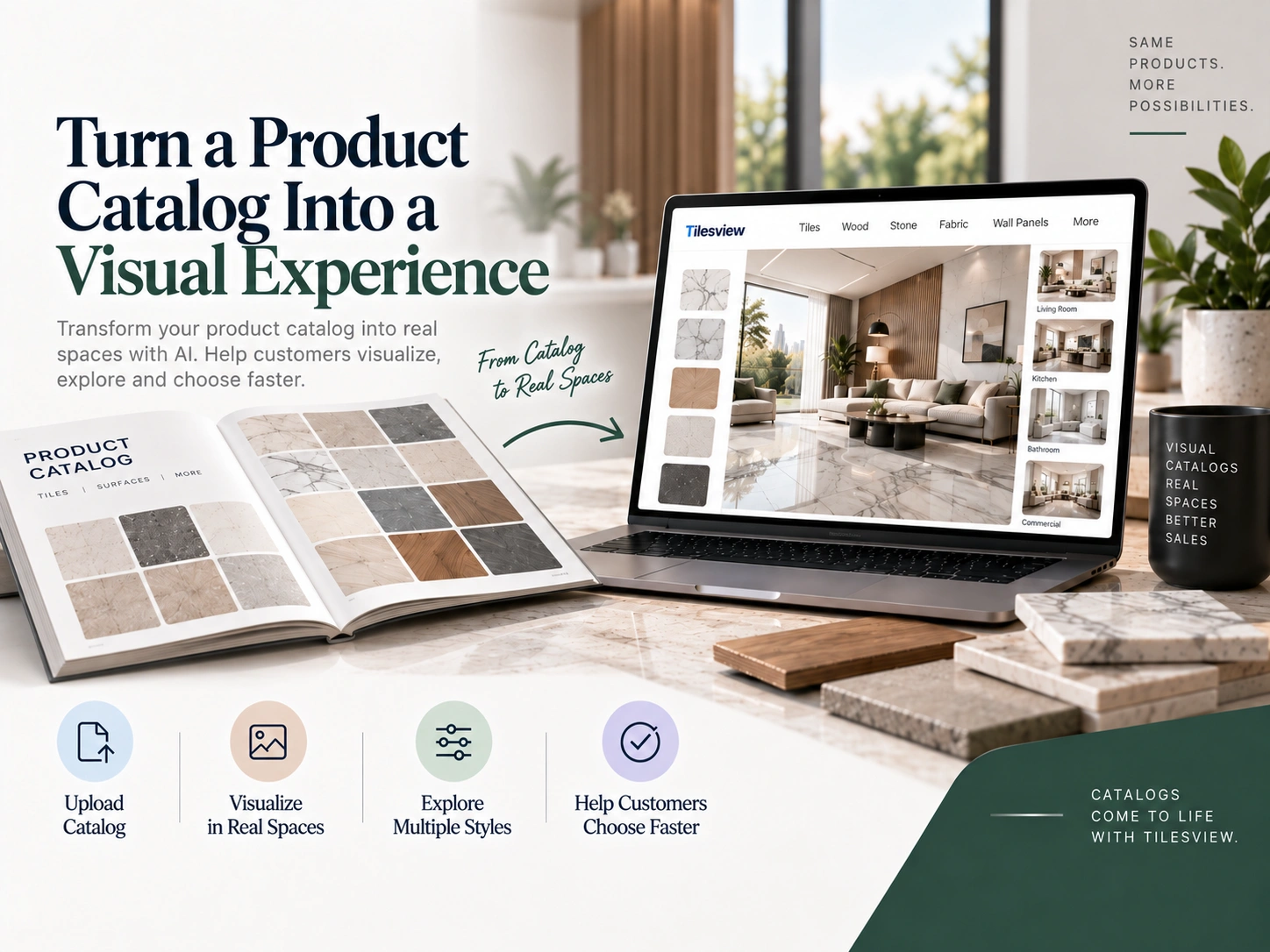
A digital catalog answers:
“What products do you sell?”
A visualizer helps answer:
“What could those products look like in my space?”
That distinction matters.
Today's customers are accustomed to interactive digital experiences. When they are making a visual purchase, simply showing products may not always be enough. Giving them the ability to experiment with those products creates a more immersive way to browse.
For a tile, flooring, or furnishing brand, this means the website can become more than a digital catalog.
It can become a product discovery and visualization experience.
Customers can explore a design, see it in context, compare it with another option, and move closer to an inquiry or purchase without leaving the digital journey.
Customers shouldn't have to rely entirely on imagination when technology can help them visualize the possibilities.
Whether someone is selecting tiles for a bathroom, flooring for a living space, or finishes for a new interior project, seeing materials in context can make the decision process clearer and more engaging.
For furnishing brands, the opportunity is equally important: make products easier to experience before customers visit a showroom, request a sample, contact a sales representative, or make a purchase decision.
The best furnishing material isn't simply the one that looks attractive in a catalog.
It's the one that works for space.
Tilesview AI Visualizer helps bridge the gap between product browsing and visual decision-making, giving customers a more interactive way to discover, compare, and experience furnishing materials.
Give buyers a more visual way to explore your tile, flooring, or furnishing collection.
Try Tilesview AI Visualizer and turn your product catalog into an interactive visualization experience.

Anand Bhoraniya is a technology entrepreneur and visualization innovator at Tilesview, specializing in AI-powered room visualization software for tile, flooring, paint, and wall covering brands. He regularly shares insights on AI visualization trends, virtual showroom experiences, personalized design technology, warm minimalist interiors, and photorealistic room design solutions.
Get the latest insights on room visualizer, interior design trends, and product updates delivered to your inbox.
No spam. Unsubscribe anytime.