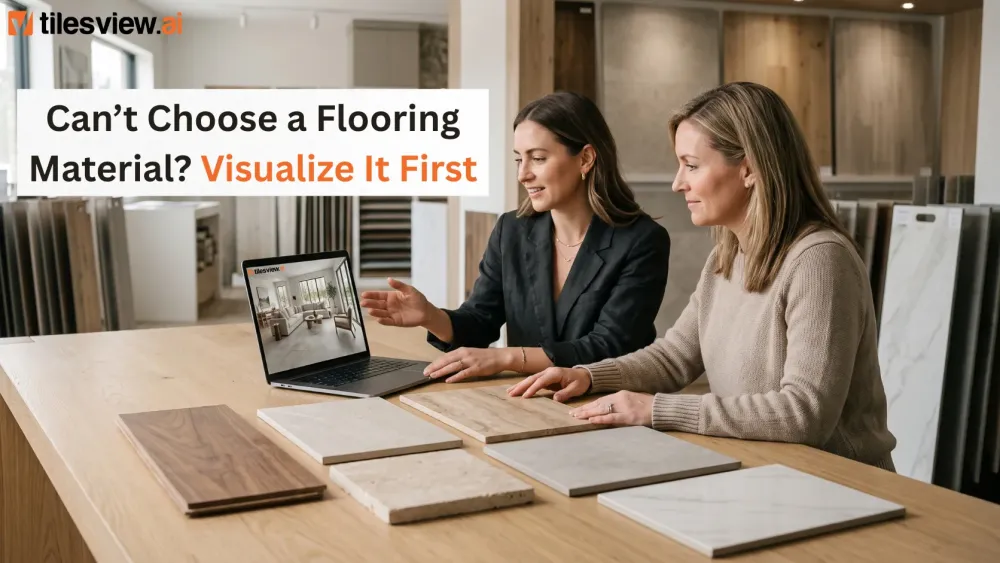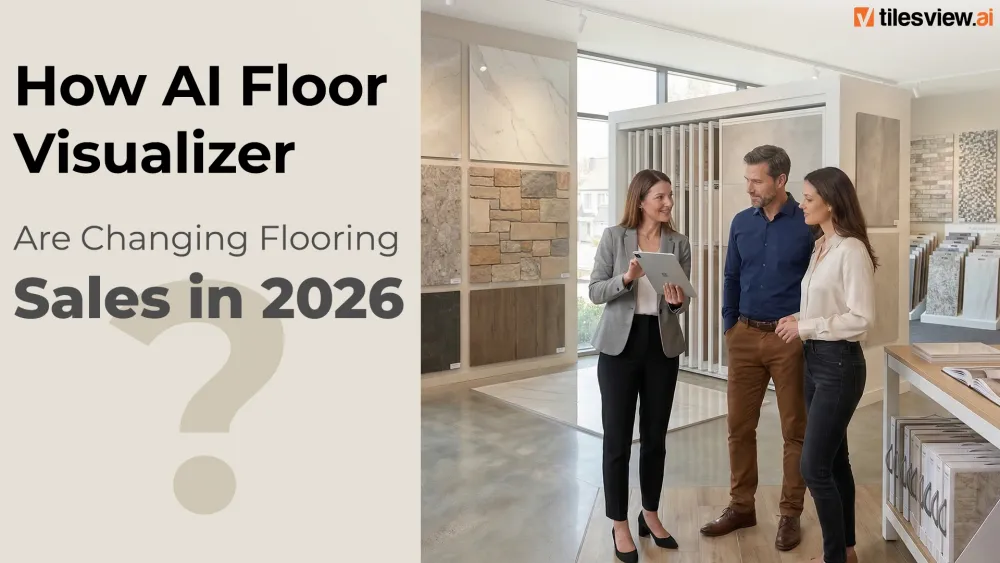
Enter a tile showroom in 2026 and you will be able to say something different. The customers do not sway weighty catalogs or carry tiles samples across counters. They are holding tablets. They are facing intelligent screens. They are doing real time testing of designs.
The use of artificial intelligence has transformed the shopping experience of individuals. Consumers are no longer happy with viewing products prior to spending their money. They desire evidence, understanding and above all trust.
That is where the modern floor visualizer enters the picture. The current customers do not wish to envision what marble or vinyl will appear like in their house. They desire to experience flooring in their room immediately and see what happened. This shift in behavior has pushed retailers to adopt smarter solutions like an AI flooring visualizer that delivers realistic previews in seconds.
The interactive buying experiences are increasingly in demand. Customers want control. They desire to have a free trial of various colors, designs and materials. A flooring visualizer turns imagination into something visible.
Instead of guessing how a tile might look in a bedroom or office, buyers can now visualize flooring directly inside a digital version of their own space. It is the level of clarity that changes everything.
The retail is no longer concerned with selling things. It is concerned with the provision of experience. And digital visualization is bringing that change.
The tile showrooms are experiencing the real problems behind the smooth displays and piles of samples.
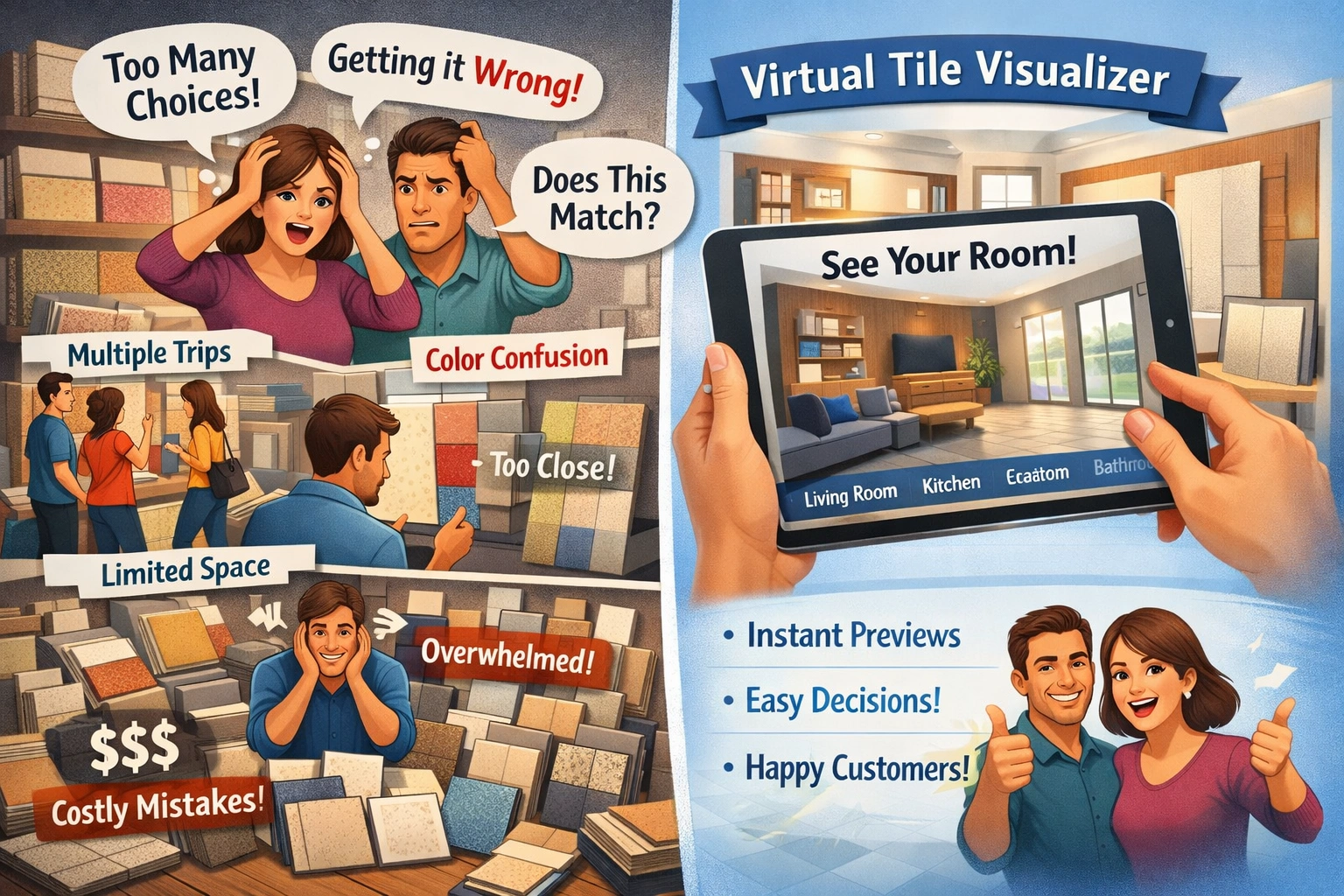
Customers are likely to be overwhelmed. It has excessive colors, textures, finishes, and patterns. Bad decisions are costly, and the fear paralyzes actions.
Typical issues in showrooms are:
Customers making numerous visits to complete a design.
Mixing up of the close colors.
Problems with matching the flooring with the wall colors.
No room to show all SKUs.
Large sample collections are expensive to maintain.
This is where a tiles visualizer becomes more than just a tech upgrade. It becomes a sales solution.
Instead of relying only on physical samples, retailers can use a flooring visualizer app to show full‑room simulations. Customers no longer have to make guesses. They get to view to the exact environment of how a product will appear in a living room, kitchen, office or even a shopping mall.
A free virtual flooring visualization tool reduces hesitation, shortens decision cycles, and also reduces returns because buyers feel more confident about their selection.
Digital tools will render showrooms that do not pay attention to them outdated in 2026. The trend in the market is towards smarter, faster, and more interactive ways of sales.
A modern floor visualizer is not just a design tool. It is a conversion engine.
Customers will be empowered when they have the opportunity to test products in actual space. They consider a wider range of options, compare finishes and experiment with patterns. This discovery usually results in premium purchases.
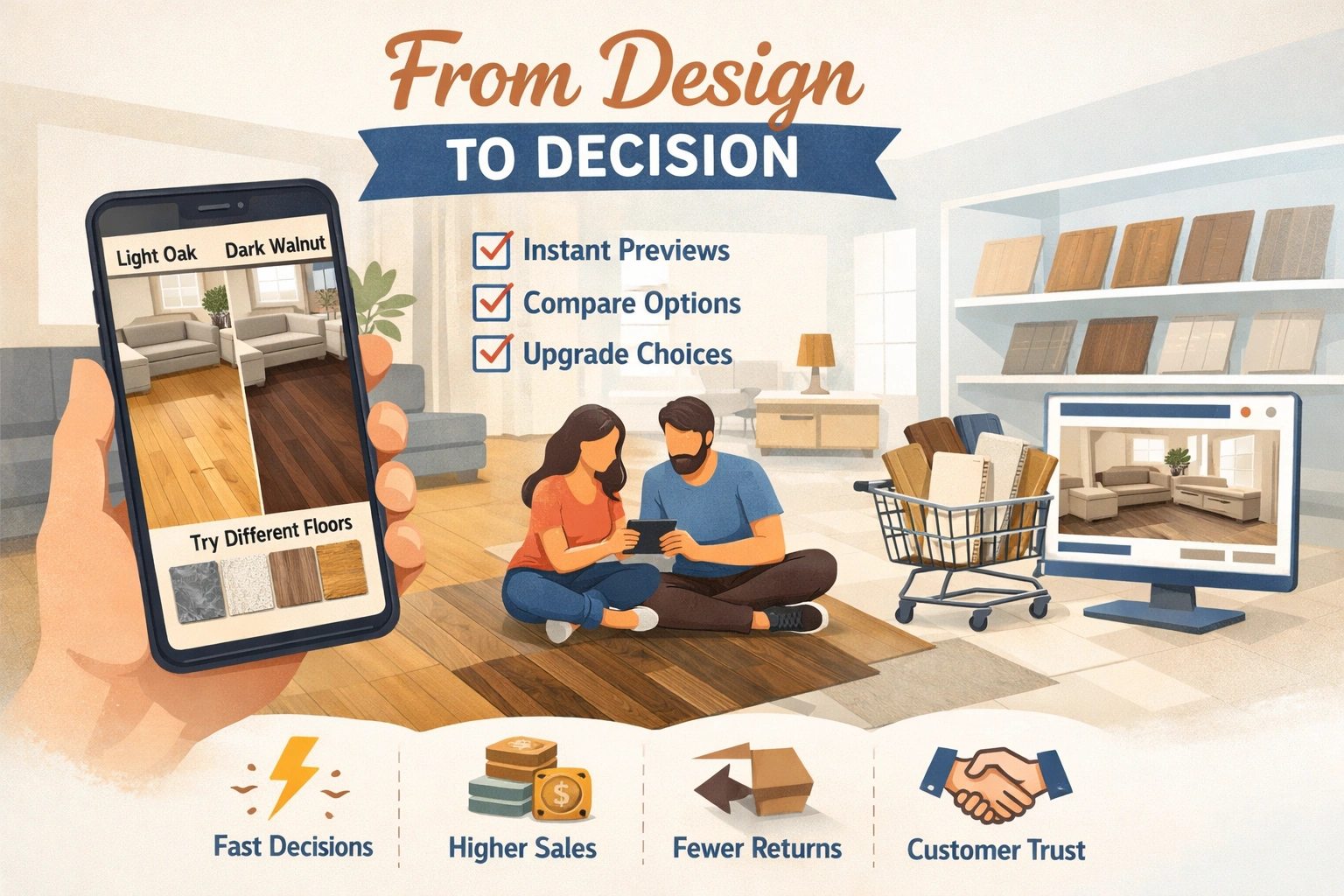
With a tile visualizer app, buyers can upload a room photo and instantly apply tiles, marble, granite, stone, SPC, WPC, laminate, vinyl, or even carpet. They will be able to change to dark walnut instead of light oak, or to glossy marble and matte stone. The preview is updated within a few seconds.
The doubt is removed by this capability to experiment with flooring in their room.
The way it enhances sales performance:
Accelerated decision making since customers get the results immediately.
Increased average order value because customers do experiment with high-end products.
Fewer product returns as a result of improved visualization.
Better interaction period within showrooms and websites.
Better customer-retailer trust.
A flooring visualizer also lets businesses showcase products that may not be physically displayed in store. Digital display can display large format tiles, rare textures or collections of imports without occupying shelf space.
Even online stores benefit. When visitors use a free virtual flooring visualization tool on a website, they stay longer. They communicate more, raise questions and make direct purchases.
Concisely, visualization converts curiosity into devotion.
The focus of this digital transformation is Tilesview. It is not merely another software platform, it is one that was created to target the tile and flooring companies that would like to modernize their selling process.
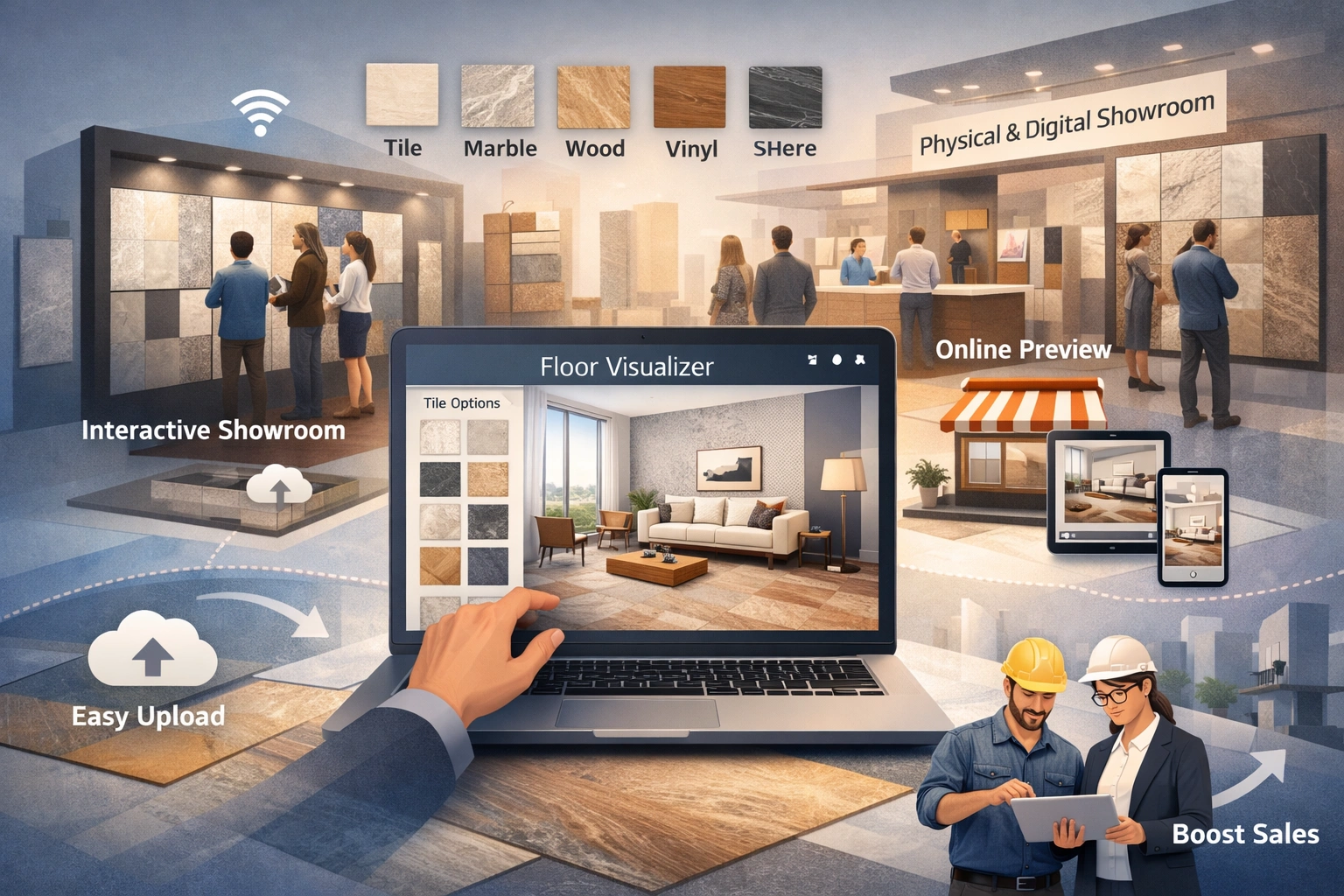
The platform acts as a powerful flooring visualizer that allows manufacturers, exporters, retailers, architects, and homeowners to preview materials in real spaces.
The system accommodates a significant variety of the materials such as tiles, marble, granite, stone, quartz, wooden floor, laminate, vinyl, SPC, and WPC. The flexibility assists businesses to cater to the needs of various customers without changing the platform.
An element of the ease with which products can be added to the digital catalog is one of the greatest strengths. Retailers upload their collections and instantly make them available inside the floor visualizer interface.
Tilesview also incorporates web page integration as well as interactive showroom. The tool can be used online by the customers prior to visiting the store. They are already short-listing by the time they walk in.
Businesses that integrate the physical exhibitions with digital previews are prominent in 2026. Tilesview assists in filling the gap.
Best AI Floor Visualizer Tools
Experience sells more than brochures help in the sale of floors.
Customers desire to shop before they make an investment. They desire to experiment with safety. A flooring visualizer provides that freedom.
When customers can visualize flooring in their own room layout, they feel confident. They make less frequent repetitive queries and progress to buying within a shorter duration.
It is also advantageous to sales teams as a result of the development of digital tools. Instead of explaining design possibilities verbally, staff can show them instantly on screen. That saves time and reduces confusion.
Retailers who adopt a flooring visualizer app early gain a competitive edge. They appear modern. They appear innovative. Most importantly, they appear customer focused.
The message is simple. Buyers in 2026 expect clarity before spending money. A smart floor visualizer delivers that clarity.
Tile businesses that embrace visualization will see stronger engagement, faster conversions, and higher overall sales. Those who resist may struggle to keep up with changing expectations.
The future of flooring is not just about beautiful materials. It is about helping customers see those materials in real life before they buy.
And that is exactly why visual technology is changing flooring sales for good.

Anand Bhoraniya is a technology entrepreneur and visualization innovator at Tilesview, specializing in AI-powered room visualization software for tile, flooring, paint, and wall covering brands. He regularly shares insights on AI visualization trends, virtual showroom experiences, personalized design technology, warm minimalist interiors, and photorealistic room design solutions.
Get the latest insights on room visualizer, interior design trends, and product updates delivered to your inbox.
No spam. Unsubscribe anytime.